Posts Tagged ‘Indian Judiciary’

News is a tough mistress and journalists are but its one-night stands. Each dawn brings a new claimant to its affections and a new byline. Like a beautiful woman, it also plays hard to get, reveling in chase. “Milli (Found it)?” Short and stocky Purushottam, who haunted the corridors of Town Hall some two decades ago, would ask if I happened to run into him.

Did I ‘find it?’ Did I find ‘news?”

Purushottam was like a magpie that needed to carry off the brightest and the biggest chunk of ‘news’ from Town Hall, so that the next day, his prize may end up on the front page of the newspaper he worked for. Purushottam’s quest epitomizes the life of all journalists. You can find us in the shabby rooms of Shastri Bhawan, chatting up clerks and officers with the same aplomb. Or in the Home Ministry, trying to outsit the others in the OSD’s room in the hope of an ‘exclusive’ comment; under the blazing sun outside Parliament; fighting with cops for the right to enter a barricaded area strewn with blood and gore after a terrorist attack; or in the the shadows of booming guns in a battlefield, chasing that elusive news. When the day is winding down and the sun sinking into blissful sleep, we begin asking ourselves: “Milli?

A journalist learns early  to pursue the big story that started out small. The need to connect the dots, to see where the ladder leads, even at the risk of getting swallowed by a snake, is a passion unlike any. In a journalist’s world, curiosity does not kill the cat. It creates a newshound.

From Meham to Sabharwal- the fight  to do one's job as a journalist. Honestly and fearlessly

From Meham to Sabharwal- the fight to do one’s job as a journalist. Honestly and fearlessly

Like the time I found myself staring at a young man pointing a stengun at me. The only other person in that deserted classroom was a shivering poll clerk, sitting in the teacher’s chair and stamping election ballots with shaking hands as the gunman hovered over his shoulders.

‘How many votes have been cast?” I asked the poll clerk, studiously ignoring the youth with the gun. Petrified with fear, the clerk said nothing and continued to furiously stamp the ballot papers one after another. I then looked at the goon standing inches away from me, his finger on the trigger. “Don’t you know it is illegal to bring firearms into a polling booth?”  I said, sounding ridiculously schoolmarmish. Like the poll clerk, the goon didn’t say anything either. He gnashed his teeth and scowled back at me.

I could do nothing. After standing around for a couple of minutes, when stillness enveloped the room in a suffocating blanket, I left, feeling silly. I could have been shot for asking that absurdly rhetorical question: “Don’t you know it is illegal to bring firearms into a polling booth?” But I had to confront the crook. I couldn’t walk away, surrender meekly to a wrong. That was not what was expected of me in my job. That was not my training or my profession.

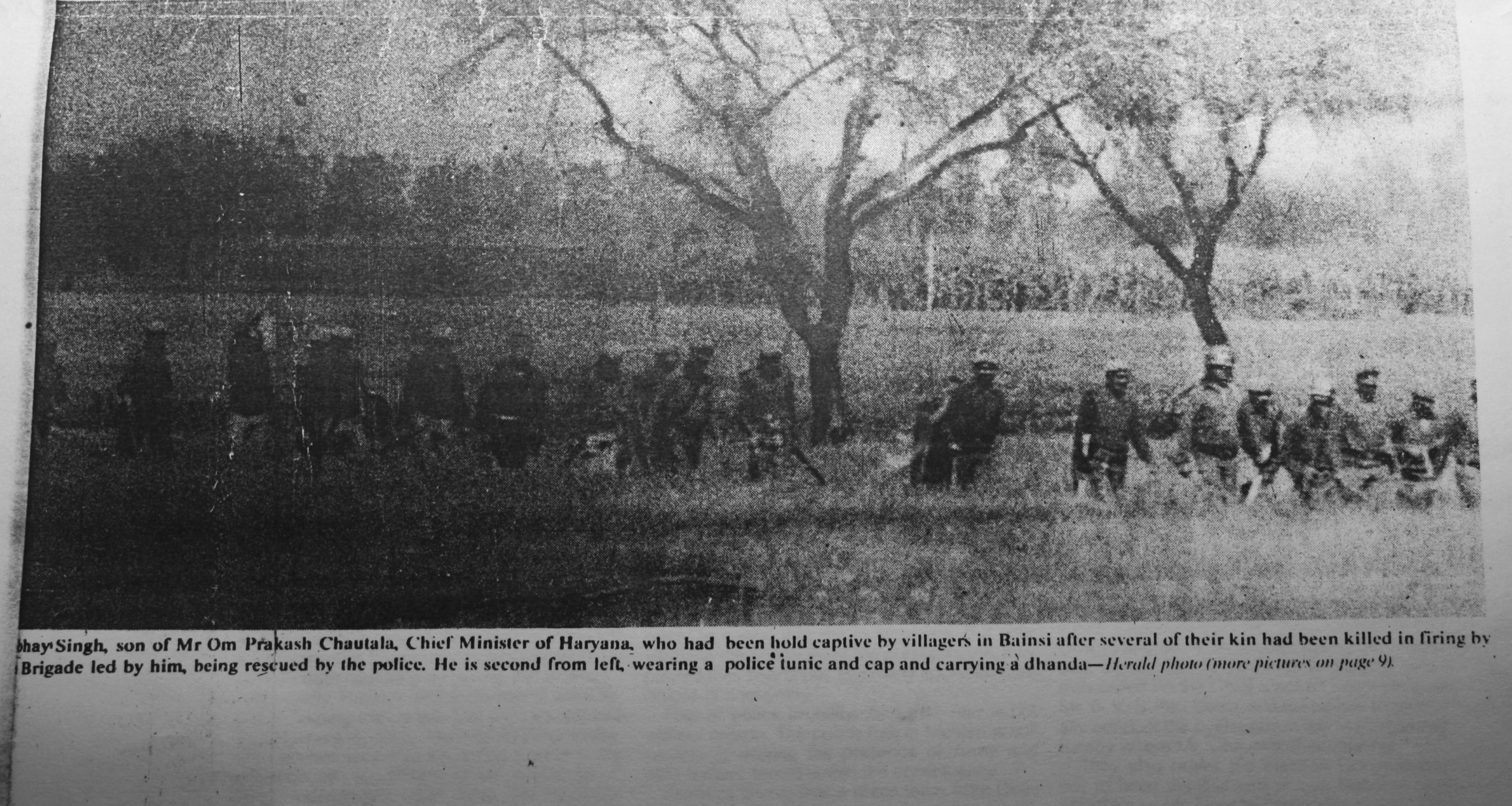
This was Meham, Haryana,  in 1990 during a bloody by-election marked by blatant intimidation of voters. There was a huge crowd outside the school where the boothcapturing was on, but nobody wanted to mess with the Green Brigade, an army of gun-toting miscreants patronised by a state government desperate to retain power. A few kilometers away at Bainsi village, a similar drama was getting played out, but with a difference. The villagers had surrounded the school where Green Brigade hoodlums had captured a polling booth. There was a standoff between the villagers and the Haryana police who wanted to help the criminals, led by Abhay Singh Chautala, son of the then chief minister Om Prakash Chautala, escape.  As I hurried towards the village, a Newstrack team stopped my car. “Don’t go there. The villagers are beating up reporters.”
A shameful rescue and a reminder that journalists can only tell a story. The rest depends on the system

A shameful rescue and a reminder that journalists can only tell a story. The rest depends on the system

There was no turning back. If there was news, I had to cover it. Photographer Kamal Narang and I were the only journalists to reach Bainsi village that day and what we saw shocked the entire nation. Nine villagers had been shot dead in a pitched battle with the police.  We watched,as the politician’s son was escorted out of the school by cops under cover of gunfire. Kamal and I were sole witnesses to this shameful rescue, and the horrific killings of unarmed villagers. Our office car was used to take victims to hospital and one of them died on way. We had to hide till our car returned, covering ourselves in blankets given to us by villagers grateful to have allies against a brutal regime. National Herald, where I was chief reporter then, led with our exclusive coverage of the poll violence, ‘Mayhem in Meham.’  The uproar that followed forced the Congress to sack the chief minister and till this day, the headline of that story is used to sum up the complete subversion of democracy in Haryana during the elections in 1990.

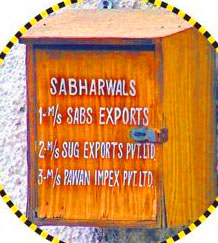
I didn’t go gunning for a big story in Meham. The big story was there and I found it, because as a reporter, I wouldn’t walk away from injustice. The same way I wouldn’t walk away when I saw the names of those three companies on a shabby letterbox outside Justice Sabharwal’s house two decades later. The defiance of that white paint on a brown letterbox, which stared at the world with the confidence that it would find no challenger, was entirely misplaced.

Next: Googly

To Be Continued

Mall-a-Mall

Well Connected

Familiarity breeds contempt, but realistically speaking, it is far more proficient at nurturing blind spots. BPTP’s offices were located in DCM building, directly opposite Arunachal building on Barakhamba Marg where MiD DAY’s offices had existed for years. Like many things which would come to us later as we chased this story, the huge BPTP hoardings had been staring us in the face all these years but had never been noticed.

A day after our trip to the residence of Anjali and Kabul Chawla at 7A Amrita Shergill Marg,  City Editor M K Tayal, photographer Rajeev Tyagi, and I  went exploring again, this time the DCM building. The sales office of  BPTP was plastered with pictures of different projects of the company, most of them malls and office complexes. While photographer Rajeev Tyagi got busy with his camera, City Editor M K Tayal and I went upstairs to the main offices, with a fake introduction at the reception. We now were prospective tenants. “We want to rent a shop in one of your malls. We have a shop in Kamala Nagar but we want to shift from there to a mall,” we told the smarmy sales executive who met us. I am quite convinced that the man was not taken in by our story, specially when Tayal and I looked completely nonplussed, at a loss for words after he asked us what it was that we sold in our shop.

“Kids’ garments. We sell children’s clothing,” blurted Tayal, whose best friend actually ran a garments’ shop in Kamala Nagar. Perhaps real-life-would-be-renters of a posh mall behave the way we did- intimidated, uncertain, conscious of stretching out several notches above themselves on the economic ladder, and hanging in there by the fingernails.  However, knowing that we were lying through our teeth made matters far worse for us than for any wannabe petty shopkeeper.

The salesperson gave us detailed information about the different malls of BPTP where shops were available. We assured him of our serious interest in renting a premise and left, clutching a colourful folder which contained everything on the company’s activities, its size and the scale of its operations. It also described in detail how leading multi-national brands such as Adidas, McDonalds, Lee, Lee Cooper, Benetton, Levis,Woodland and Nike all chose to have their outlets in malls built by BPTP.

BPTP, the owners of which had partnered with the Sabharwals in their firm with a paid up capital of Rs 1 lakh, was a gargantuan Rs 232 crore company. It had developed landmark malls, including CTC at Najafgarh Road, CBD at Surajmal Vihar in East Delhi, and Shop-In Park at Shalimar Bagh, besides several other commercial and residential complexes. BPTP was also coming up with malls and commercial complexes in Faridabad, Gurgaon and Noida, and the company’s clients included the virtual who’s who of MNCs, looking for a foothold in India to capture its cash-rich middle class.

The very same BPTP had opted to become a partner in a company with a paid up capital of Rs 1 lakh!

We came out with another page one story on Sabharwal on May 18, 2007: ‘Mall-aa-Mall.’ It detailed the close business relationship between the two sons of Justice Sabharwal and BPTP. We duly published the partnership documents between the Chawlas and the Sabharwals, as proof that we were telling the truth and nothing but the truth.

Gol mall hai

Footprints in Stone

This was the first time we played on the word ‘mall’ – which in the English language means a conglomerate of shops but is a vulgar variant of money ( maal) in Hindi. “Mall-aa-Mall” lent itself to interpretation. Our next story the following day, on May 19, 2007, was titled ‘Gol Mall Hai’ (There is Something Fishy). The story showed the footprints which led to MiD DAY’s expose of the links between the Sabharwals and mall developers BPTP, with documentary proof.

We enjoyed the wordplay on ‘mall’, our team of designers, reporters, and sub-editors. The headlines for the Sabharwal series, hammered out in the wee hours of the morning as we crowded around our designers setting out the front page,  were a collective effort, as was most of the Sabharwal story. The teamwork bonded us, as we dug in our heels and prepared for a battle which we were sure would follow our pitchforking on the website of the Ministry of Corporate Affairs.

So why did the Chawlas invest in Pawan Impex, a company with an extremely humble share capital of Rs 1 lakh?

According to the list of shareholders of Pawan Impex available on the Ministry’s website, as of September 30, 2006, Kabul and Anjali held 7.5 lakh shares, valued at Rs 75 lakh each, thereby making a direct investment of Rs 1.5 crore in the company. An extraordinary general meeting of Pawan Impex on June 21, 2006 decided to dramatically increase the authorised share capital of the company from Rs 1 lakh to Rs 3 crore. The company had been showing Rs 1 lakh as its nominal capital ever since its registration in 2002.

We had the online records from the Ministry of Corporate Affairs but we were not satisfied. We wanted to be doubly sure of our facts. Tayal, legal correspondent Praveen Kumar, and I went to the Ministry’s records section to take a look at the physical files relating to the Sabharwal companies. Entry to the records section was restricted.  We were not allowed to carry a camera, cellphone, or even a pen into the dusty and dilapidated room, supervised by a clerk with the skills of an invigilator in an examination centre. He watched us with an eagle eye as another clerk brought out the files we had requested. We sat on long wooden benches, reverentially holding the files before us, and scribbled notes in pencil. All the documents pertaining to the partnership between the Sabharwals and the Chawlas were there in the files. They told us nothing more than what the online records did. But the yellowing papers we shook awake from their eternal slumber in dusty file folders, gave us confidence that there was no digital illusion about the Ministry’s website. The sons of the former chief justice of India were in partnership with leading mall builders at a time when he was the presiding officer in the sealing case.

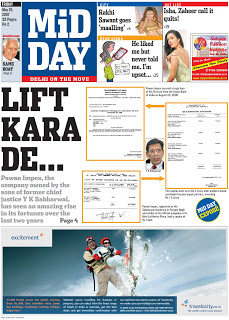
Lift Kara DeOn May 25, we did another story, producing documents to show that BPTP was a 50 per cent partner in Pawan Impex, the company of the Sabharwals . The story was headlined : ‘Lift Kara De’   and  gave documentary proof that leading builders of the country had invested in the company of Justice  Sabharwal’s sons  when he was directing the demolition drive in Delhi as the chief justice of India.

The headline played on Adnan Sami’s  popular Hindi song of the day, beseeching god for a ‘lift’ in life. It befitted the saga of a small company snagging a multi-billion partnership.

Notice and One Queer Duck

To be Coninued

A couple of months passed after my futile, and furtive, attempts to draw the attention of the Delhi media and activists to the Sabharwal letterbox. I had just done a story on  Shweta Mahajan, the battered daughter-in-law of politician Pramod Mahajan, when MiD DAY decided to start an edition in Delhi, with me as its resident editor. 

As the hunt for stories for the newspaper’s launch edition began, our thoughts turned to the letter box. A surreptitious walk down the road proved that the object of our journalistic affections still clung to the wall of Sabharwal’s house at 3/81 Punjabi Bagh, with the white lettering intact.

The story was alive and even though Sabharwal had just then retired as CJI, it was as valid. However, we now needed to follow up on our lead and prove that the companies mentioned on the letterbox were actually being run from the bungalow. We decided that the simplest way of doing that would be to establish that letters to Pawan Impex, Sab Exports, and Sug Exports were being delivered to 3/81 Punjabi Bagh. That entailed a visit to the local post office and a chat with the postman responsible for delivering mail on the street of Sabharwals’ bungalow.

On the prowl

I skipped our editorial meeting one morning and drove down to the local post office in East Punjabi Bagh, a short distance from my residence.

“I am looking for the postman who delivers letters on our lane,” I said to nobody in particular in the cramped office, conscious that I was being scanned like an envelop with no address. Perhaps I had overdone my effort to dress nattily in a salwar-kameez with jewellery to match. I thought the ruse was needed to pass off as a resident of 3/81 and thereby justify my claim to the mails getting delivered to the Sabharwal house.

“We seem to have lost a couple of letters so I thought I will check it out here personally. There’s one letter which is very important. We should have received it about a week ago, at 3/81,” I said.

“That income tax letter? I myself gave it to your servant yesterday. It was for Pawan Impex.”

Bingo! I could actually see Lady Luck smile down upon me at that moment. The tall, scruffy postman who spoke to me was responsible for delivering letters on Road# 81 and was the first to confirm that the companies mentioned on Sabharwals’ letterbox were indeed running business from the house.

The team was jubilant. This was just a baby step but we could sense we were reaching somewhere. We now needed to be absolutely sure that the three companies were indeed registered at Sabharwal’s bungalow and decided to check out the Registrar of Companies for details of the firms. None of us had ever reported on business and it was left to our brilliant legal reporter, Praveen Kumar, to approach the Registrar of Companies. After considerable sweat and tears, we found out that the process was extremely simple. Anyone could create a log-in and access a company’s records on the internet site of the Ministry of Corporate Affairs. Alternatively, we could file an application with the ministry and physically verify the files.

City Editor M K Tayal and Praveen Kumar created an account on the Ministry’s website but then we were stuck…

None of us had a credit card and the website required an access fee of Rs 50 that had to be paid by a credit card. I finally borrowed the credit card of our office manager on the promise that I would hand in receipts for the money spent so that he might claim it later from office. Little did I know then that the strict eye which the accounting department kept on all expenditure by senior employees would be my savior later on. Those receipts, painstakingly printed off for our manager each time we accessed the records of Sabharwals’ companies, later became valuable proof of our honest legwork on the story.

All it took was monumental patience with a slow internet connection and a measly Rs 200 or so to download documents from the ministry’s website, confirming that the three companies, Sab Exports, Sug Exports and Pawan Impex, had their registered offices at the residence of Y K Sabharwal and these were in the name of his sons- Chetan and Nitin.

We now had copies of the registration papers and certificates of incorporation filed by the three companies, each of which had given 3/81, Punjabi Bagh as the address of their registered office.

To be Continued

Next – Look What We Found!


The Letterbox Which Started It All

This started it all

The letterbox was decidedly old. Its brown shabbiness gave no indication of the wealth, or the status of the inhabitants of the house.

And yet, it was the mark of Cain. A clue, it hung there, outside the house of the then Chief Justice of India Y K Sabharwal. So like a faded prostitute seeking a rendevouz – inviting a look that went beyond the wrinkled skin and drooping breasts.  In vain…

But I had gone to see that very letterbox, to coax it to tell the story it silently screamed to each and every passerby on the street. “That Sabharwal has ordered the demolition of thousands of shops because they are in residential premises. But he is running companies from his own house,” I was told the previous night as I climbed the stairs to my bedroom. The conversation was one of many such I was used to having with my in-laws while entering or exiting the house. The day’s rants and raves which keep a family bonded, and on the same page.

But this was different. “What do you mean?” I asked. “You should see the letterbox outside his house. It has the names of so many companies. Look at this man! He is running companies from his own house while getting the houses of others demolished for doing the same,” I was told.

The indignant ‘whistle-blower’ was my husband’s older brother whose eagle eye had scanned the letterbox as he waited with some others outside Sabharwal’s house that morning to collect a donation for the local temple. My husband’s family and the Sabharwals were refugees from Pakistan and, like many others, had found shelter in Punjabi Bagh after the Partition brought them to India. As they struggled to recreate their shattered lives, the residents of the colony clung together through temples, Gurudwaras, and shared religious activities.  Sabharwal’s mother and my husband’s mom used to be together at prayer meetings. Later, the Sabharwals became a symbol of success for the displaced lot  when their younger son, Yogendra, became the Chief justice of India. While he shifted to an official bungalow, one of his brothers continued to live in the family home at 3/81, Punjabi Bagh.  The CJI’s official car, with its elaborate security, was often spotted outside the bungalow on weekends, keeping interest alive in one of the most successful families of the area.

Noj for Newj

‘Noj for Newj’ – It was a phrase used time and again in my journalism school by a professor with a slight pronunciation issue. An outstanding Hindi journalist, he impressed upon his class that this ‘noj’ was something a reporter just couldn’t do without. As I stood outside Sabharwal’s bungalow in early dawn the next day, that nose twitched.  Three names were hand-painted on the faded brown letterbox outside his family home. These were SABS Export, Pawan Impex, and Sug Export.

The white paint was stark against that dull brown, staring at the world with the confidence that it would find no challenger.

I could hardly believe my eyes.This couldn’t be true. How could the house of the Chief Justice of India be used for running commercial establishments? How could the man who was leading a campaign against commercialization of residential premises, run commercial companies from his own residence? Justice Sabharwal had been a knight on a white charger, wreaking the wrath of law on the unlawful. Thousands of buildings lay reduced to heaps of rubble in Delhi because he had forced the civic body to take action against unscrupulous traders and builders who ran their business from illegal premises.

It was Justice Sabharwal who had said in his order setting out the process for sealing of shops that: “Rule of law is the essence of Democracy. It has to be preserved. Laws have to be enforced.”

How could he be letting the law be transgressed in his own backyard then!  It was beyond belief.

My first reaction was to seek out my colleagues- reporter M K Tayal and photographer Rajiv Tyagi. We decided Rajiv would come by at 5 am the next day to click pictures of the letterbox. Early morning hours would give Rajiv the light he needed, and the secrecy I was keen on.

Rajiv took the pictures the next day, as my husband and I warily looked out for passers by. We didn’t want to alert the inmates of the house to the letterbox that told tales.  Later, as we sat together over breakfast, the enormity of the issue hit us hard.

Neither one of us was afraid, or had an iota of doubt about the story we had started to chase. To the contrary, we were outraged and wanted the world to know the terrible duplicity at work in the demolitions. It was incredible that the all-powerful CJI would allow commercial companies to be run from his house and yet, set the state machinery after others guilty of similar violation of law. MCD bulldozers were running amok in Delhi, razing to the ground multi-storey buildings, markets and shops which had sprung up in residential areas. The city appeared to have been carpet bombed, ripped open for a crime beyond redemption, its gaping wounds bleeding bricks and mortar.

Delhi was a sea of rubble, in which we had chanced upon an island of impunity- the house of Justice Y K Sabharwal.

To Be Continued

Next – INJUSTICE

It has been seven years since I was sentenced to jail for contempt of court. A lot has happened in these seven years. For one, I changed countries and now live in Canada instead of my beloved India.

Seven years ago, I decided that I had to end my mind-numbing race against time and break free from what I came to see as an endless cycle of stories that needed to be retold every few years. Tales of corruption or misery, of lives lost or broken, and if I looked hard enough, perhaps some of human triumph- they repeated themselves with frightening regularity. Nothing ever got resolved, nothing really moved forward. Plus ça change, plus c’est la même chose. The more things change, the more they remain the same. It was time for me to go.

I left- abruptly and without a goodbye to those who gave meaning to the life I had led till then. Much of my family had turned to dust with my father’s ashes, and I scooped up what remained of it and holding it close to my heart, I came here to another land, hoping for new beginnings after 25 years of journalism.

I know now that nothing new will grow when the old still chains my feet. The sun that rises over the land I left, is still my sun and no mountain is taller than the one that called out to me every summer. My ears strain for the music of monsoon.

I know now that tales must be retold and there are no doors between the past, the present, and the future. All flow in, from one to another, creating the mosaic called life.

So I write – of stories that I had once told. Some will be long- like the Sabharwal case for which three of my colleagues and I were sentenced to imprisonment for contempt of court. I hope you will bear with me, all my good friends who have always been by my side through good and bad. You know who you all are, and trust you me- I will always have you in my thoughts till the moment all thoughts cease.

I begin with ‘In Contempt’, because that’s how I meet the threat of retribution for writing the truth.

To be continued

NEXT : The Silent Tattler- The Letterbox That Told Tales